

TL;DR
- Below roughly $10-12K/month of marketing budget, an agency retainer usually beats a full-time hire on output per dollar; above $30K, an in-house core wins long term.
- In between, a hybrid - lean in-house core owning strategy, specialists executing channels - beats either pure option.
- A third option most comparisons skip: one person directing an AI marketing agent.
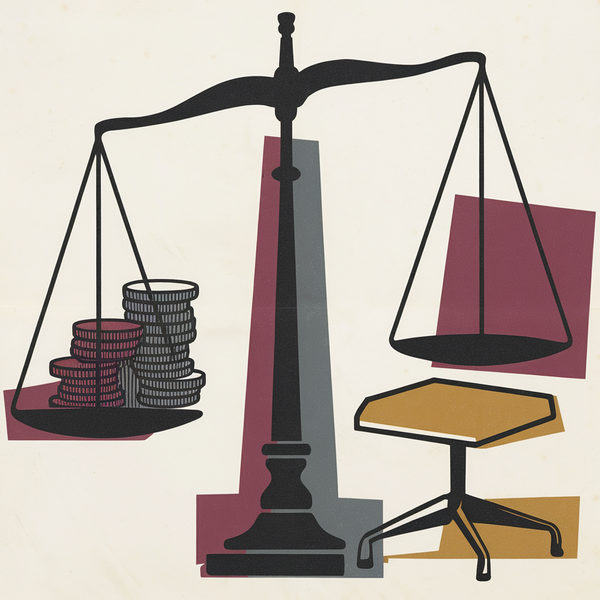
Most guides hedge. This one won't. If your monthly marketing budget sits below roughly $10,000–$12,000, an agency retainer almost always delivers more output per dollar than a full-time in-house hire — and if it sits consistently above $30,000 with stable, omnichannel demand, building an in-house core team becomes the smarter long-term investment. Everything between those thresholds is where the decision gets interesting, and where a deliberate hybrid model outperforms either pure option.
Neither in-house nor agency marketing is universally better. The right answer depends on three variables: your budget, your company stage, and the channel complexity you need to cover. In-house marketing means employing your own marketers — they sit on your payroll, absorb your brand, and own institutional knowledge. Agency marketing means contracting an external firm under a retainer or project scope, trading direct control for access to specialist teams, proven processes, and flexible capacity. A hybrid model — a lean in-house core owning strategy and brand, with agencies executing specialist channels — is not a compromise; it is the dominant real-world structure, and most guides ignore it entirely.
 Gyrify
The direct answer: In-house vs agency marketing
In-house wins by default when:
- Your marketing budget is large enough and stable enough to keep at least two or three full-time specialists productively utilized year-round.
- Marketing is a core competitive advantage — your brand voice, product narrative, and customer relationships require deep, daily immersion that a rotating agency account team cannot replicate.
- You operate in a regulated or brand-sensitive category where institutional memory and confidentiality outweigh cost flexibility.
An agency wins by default when:
- You need multi-channel expertise within 30–60 days and cannot afford the 4–6 months it takes to hire, onboard, and ramp an internal team.
- Your budget or campaign volume fluctuates — agencies absorb that variability without fixed overhead.
- You need genuine specialists across paid media, technical SEO, and creative simultaneously, and hiring three or four separate seniors is economically out of reach.
The Association of National Advertisers reports that 82% of member brands have an in-house agency, yet 92% of those still work with external agencies.
That single statistic dismantles the false binary. The real question is not which model wins — it is which functions belong inside and which belong outside.
Side-by-side comparison: Costs, control, and speed
True cost of in-house
A mid-level in-house marketer, a marketing manager with four or five years of experience; typically earns a base salary of $80,000–$110,000 in a major Australian or US market. Add benefits, payroll taxes, and superannuation contributions and the fully loaded annual cost climbs to $105,000–$150,000 before you touch a single tool. Layer in your marketing tech stack — analytics platforms, automation, design tools, project management — and you add another $8,000–$20,000 per year. Recruiting takes weeks, sometimes months, and agency or internal HR fees can run 15–20% of first-year salary for senior roles. Once hired, expect a 3–6 month ramp before that person delivers full-productivity output.
A 3–4 person in-house team covering performance, content, brand, and operations regularly costs $400,000–$600,000 annually fully loaded — a fixed cost that persists whether you have three campaigns running or thirty.
Hidden costs most guides consistently omit: tool stack duplication (your team buys licenses the agency already held), management overhead on the founder or CMO to lead and develop the team, and the hard-to-quantify cost of turnover. Losing a senior in-house marketer means replacing not just a salary but months of accumulated brand context.
True cost of an agency
Agency retainers for small-to-mid-market companies covering multiple channels typically run $3,000–$15,000 per month ($36,000–$180,000 annually), depending on scope, geography, and channel complexity. That fee buys access to a pod of specialists, paid media buyer, SEO strategist, account manager, designer; whose individual hiring cost would vastly exceed the retainer.
The hidden costs on the agency side are different but real. Scope creep drives change orders when your needs expand beyond the agreed brief. Onboarding lag means the first 60–90 days rarely produce peak-efficiency output. Communication overhead, briefings, approval cycles, status calls; consumes 2–4 hours of internal time per week that most companies don't budget for.
The cost-per-output math flips at approximately $10,000–$15,000 per month in total marketing spend. Below that threshold, an agency retainer delivers more skills, tools, and channel coverage than a single fully-loaded hire. Above $30,000 per month with consistent workload, building in-house becomes economically rational because the fixed cost of internal talent is offset by higher output and faster iteration.
Control and brand knowledge
In-house teams accumulate institutional memory, the history of every test, every audience nuance, every brand decision; and that knowledge compounds over time. It stays with the company as long as the team stays. Forrester frames in-house agencies explicitly as "a strategic resource to improve control, transparency, and marketing operations," not simply a cost play.
Agencies hold knowledge externally. When you churn an agency or lose a key account manager, that context walks out the door.
The State of In-housing 2023 report found that 93% of brands expected greater confidentiality from in-housing, but only 20% reported achieving it — a gap that reflects how difficult it is to structurally protect information without proper governance, regardless of model.
Speed to execute
Agencies launch faster from a standing start — their processes, templates, and tools are already live. In-house teams, once embedded, respond faster to internal changes, product pivots, and crises because they sit next to the people making decisions. For paid media, agencies typically outperform early; for content and brand storytelling, in-house typically outperforms at maturity. Crisis response consistently favors in-house, where there is no approval lag between observation and action.
Decision framework: Which model fits your situation?
By company stage
Startup (pre–product-market fit, under $5M revenue): Your messaging will change. Your audience may change. Committing to full-time marketing hires before your ICP is validated locks in fixed costs against a moving target. Start agency-led or fractional — test positioning and channels without permanent headcount.
Growth stage ($5M–$30M revenue): This is where hybrid wins. You have enough volume to justify one strong in-house marketing lead who owns strategy and brand. You do not yet have the workload or budget to staff every specialist channel internally. Agencies handle performance media, SEO, and campaign production; in-house owns the brief, the narrative, and the KPIs. DTC analyses suggest that a full five-person in-house team rarely makes financial sense below $30M annual revenue, where fully loaded costs above $520,000 consume a disproportionate share relative to agency retainers delivering comparable output.
Enterprise (above $30M revenue, mature brand): At this scale, in-house control pays off. Marketing is continuous, brand is complex, and the cost of institutional knowledge loss, through agency churn or poor briefing; is high. ANA data shows enterprises increasingly handle 61% of their marketing work internally while retaining agencies for specialist or overflow capacity.
Self-scoring checklist
Answer each question and tally:
- Monthly marketing budget under $12,000? → +1 agency
- Need measurable results within 60 days? → +1 agency
- Need 3+ specialist channels simultaneously? → +1 agency or hybrid
- Marketing is central to your competitive differentiation? → +1 in-house or hybrid
- Budget is stable for at least 12 months? → +1 in-house
- You have a senior internal marketer who can own strategy today? → +1 hybrid
Score heavily toward agency (3+): start with a retainer. Mixed: build a hybrid. Score heavily toward in-house (3+): invest in internal talent now.
Channel complexity matrix
| Channel | Leans In-House | Leans Agency |
|---|---|---|
| Brand and positioning | ✓ | |
| Always-on content | ✓ | |
| Lifecycle and CRM | ✓ | |
| Paid search and social | ✓ | |
| Technical SEO | ✓ | |
| Influencer and partnerships | ✓ | |
| Campaign creative production | Hybrid | Hybrid |
GyrifyThe hybrid model: In-house core + agency specialists
The hybrid is not a fallback when you cannot decide. It is the deliberate structure 92% of brands with in-house agencies already use. The World Federation of Advertisers found that 70% of brands with strategic capabilities in-house plan to shift additional tasks from external agencies to internal teams within three years — a directional signal that companies treat hybrid as a path toward greater internal ownership, not as a permanent compromise.
A workable hybrid structure:
- In-house owns: brand positioning, annual strategy, messaging hierarchy, internal stakeholder alignment, KPI frameworks, and budget governance.
- Agency owns: paid media buying and optimization, technical SEO execution, large-scale creative and video production, campaign reporting.
Governance makes or breaks the model. Define scopes in writing: agency owns Google Ads strategy and optimization; in-house approves creative and sets budget ceilings. Run monthly performance reviews against shared dashboards, and quarterly strategy sessions to re-align priorities. Critically, ensure your contracts specify that all ad accounts, creative assets, audience lists, and performance data remain your property — not the agency's. Brands that skip this clause face painful renegotiations or cold-start migrations when they switch vendors.
The hybrid outperforms pure agency when your brand is complex enough to require daily immersion, and outperforms pure in-house when your channel mix demands specialist depth you cannot economically staff internally.
Common mistakes and how to avoid them
Hiring in-house too early. The sunk-cost pressure is real: once you've committed to a $120,000 salary, you rationalize work to fill the role. Companies that build internal teams before their ICP, positioning, and channel mix are validated spend the first six months iterating on foundations that may still change substantially. Use agencies and fractional consultants to validate before you hire permanently.
Staying agency-dependent too long. Over-reliance on an agency erodes internal marketing capability and negotiating use. If your agency fees could fund two in-house roles and your campaigns are continuous, you are overpaying for flexibility you no longer need. The signal to move: your agency is effectively your only source of marketing strategy, and your internal team cannot evaluate or redirect their work without significant lag.
Failing to define KPIs for either model. An in-house team without clear outcome metrics drifts toward activity, content produced, campaigns launched; rather than revenue contribution. An agency without performance targets defaults to output metrics like impressions and clicks. Set business-level KPIs (pipeline, CAC, ROAS, qualified revenue) and assign single-point accountability for each metric, whether that sits in-house or with the agency. The model that cannot be measured will underperform regardless of structure.
Rushing transitions. Moving from agency to in-house — or reverse — without a 60–90 day overlap risks campaign gaps, lost audience data, and broken reporting continuity. Before an agency exits, document every playbook, transfer every account, and assign an internal owner for each channel. Before a new in-house team takes over full ownership, run them in parallel with the agency until the learning curve closes.
The shortcut through this whole process
Every question in this article exists because an agency is hard to see inside. Gyrify Operator removes the problem rather than helping you navigate it: one named person accountable for shipping, the work visible in your own account as it happens, and no rotating delivery team to lose halfway through. If the diligence is starting to feel disproportionate, it is worth a look before you shortlist.
See how Gyrify Operator works →
GyrifyFAQ
What is the difference between in-house and agency marketing?
In-house marketing is delivered by employees on your payroll who work exclusively on your brand, building deep product knowledge and institutional memory over time. Agency marketing is delivered by an external firm serving multiple clients, offering specialist expertise and scalable capacity under a defined retainer or project scope. Most mature companies combine both — ANA data shows 92% of brands with in-house agencies still engage external agencies for specialist work.
Is it cheaper to hire a marketing agency or build an in-house team?
At lower budgets, an agency is almost always cheaper — a retainer of $5,000–$10,000 per month gives you access to multiple specialists, while a single fully-loaded in-house marketer costs $105,000–$150,000 annually before tools. As your monthly budget exceeds $15,000–$30,000 with consistent, stable workload, the math shifts and in-house starts delivering better cost-per-output. The break-even point depends on how many channels you need and how fully you can utilize internal roles year-round.
What is a disadvantage of using an in-house advertising agency?
The primary disadvantage is fixed overhead: salaries, benefits, tools, and management cost exist regardless of campaign volume, making in-house expensive during slow periods or strategic pivots. In-house teams can also become insular, lacking the cross-client pattern recognition agencies accumulate; and struggle to staff highly specialized channels like programmatic or advanced SEO without additional expensive hires.
When should a company switch from an agency to an in-house marketing team?
Switch when your agency fees could fund one or more dedicated internal roles, your campaigns are continuous rather than episodic, and your brand complexity demands the daily immersion only an internal team provides. WFA data shows this transition typically becomes attractive once annual marketing budgets consistently support multiple specialist roles, with enterprises increasingly handling 61% of their work internally. Plan a 60–90 day overlap so the agency transfers playbooks, accounts, and institutional knowledge before the in-house team takes full ownership.
Can you use both an in-house team and a marketing agency at the same time?
Yes — and for most growth-stage and enterprise companies, this hybrid structure is the optimal model, not a fallback. ANA reports that 92% of brands with in-house agencies still work with external agencies, typically splitting brand, strategy, and content internally while outsourcing performance media, SEO, and large-scale creative production to specialist agencies. Success requires clear scope boundaries, shared KPIs, and contractual data ownership clauses that protect your accounts and assets if the agency relationship ends.